Print preview
Worksheet Polynomial Functions
2.
3.
Find the equation for a polynomial \(f(x)\) that satisfies the following:
-
Degree \(3\)
-
Zero at \(x=2\)
-
Zero at \(x=-1\)
-
Zero at \(x=-3\)
\(f(x) =\)
4.
5.
6.
Determine the end behavior of the following polynomial function:
\begin{equation*}
f(x) = -10 x^{9} - 5 x^{16} + 20 x^{18} - 15 x^{2} - 16
\end{equation*}
The leading term of the polynomial is
The degree of \(f(x)\) is
The leading coefficient is
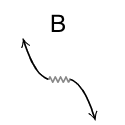
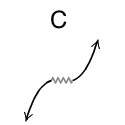
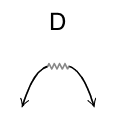
The end behavior of the polynomial \(f(x)\) is of the form:
where:
7.
Determine the end behavior of the following polynomial function:
\begin{equation*}
f(x) = 6 - 17 x^{3} - 6 x^{11} - 2 x^{15}
\end{equation*}
The leading term of the polynomial is
The degree of \(f(x)\) is
The leading coefficient is
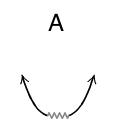
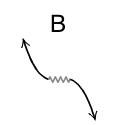
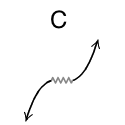
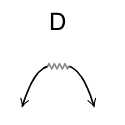
The end behavior of the polynomial \(f(x)\) is of the form:
where:
8.
Given \(f(x) = (x + 4)(x-4)(x-5)\text{,}\) find the roots in increasing order.
The roots are , , and .
To the left of the first root, is the graph of \(f(x)\) above or below the x-axis? Answer above or below: .
Between the first two roots, is the graph of \(f(x)\) above or below the x-axis? Answer above or below: .
Between the last two roots, is the graph of \(f(x)\) above or below the x-axis? Answer above or below: .
After the last root, is the graph of \(f(x)\) above or below the x-axis? Answer above or below:
9.
10.
11.
12.
13.
14.
15.
For \(f(x) = {2x^{3}\mathopen{}\left(2x-7\right)}\text{,}\) determine the `x`-intercepts and the end behavior. Enter intercepts as a comma separated list of points.
Intercepts :
Inputting the function into the Desmos graphing tool below may help investigate the function.
.
16.
For \(f(x) = {-2x^{3}\mathopen{}\left(-3x-3\right)}\text{,}\) determine the `x`-intercepts and the end behavior. Enter intercepts as a comma separated list of points.
Intercepts :
Inputting the function into the Desmos tool below may help investigate the function.
.
17.
For \(f(x) = {\left(2-x\right)\mathopen{}\left(3x-1\right)\mathopen{}\left(x^{2}-3\right)}\text{,}\) determine the `x`-intercepts and the end behavior. Enter intercepts as a comma separated list of points.
Intercepts :
Inputting the function into the Desmos tool below may help investigate the function.
.
18.
For \(f(x) = {3x^{3}\mathopen{}\left(2x-8\right)}\text{,}\) determine the `x`-intercepts and the end behavior. Enter intercepts as a comma separated list of points.
Intercepts :
Inputting the function into the Desmos tool below may help investigate the function.
.
19.
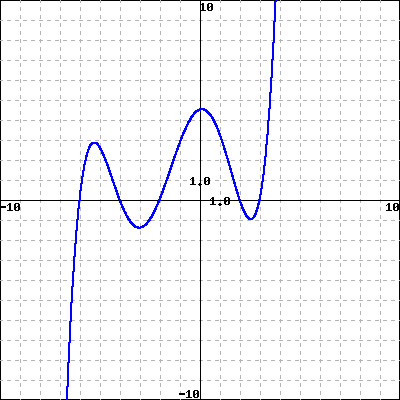
Let the graph of \(f(x)\) be given below. Find the formula of \(f(x)\text{,}\) a polynomial function, of least degree. Watch the video below for help.
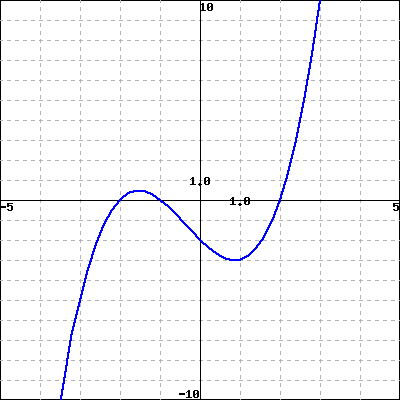
(Click on graph to enlarge)
\(f(x) =\)
If the video does not work, click here to watch on YouTube.

